A viral post by the Washington Post announced that all lead pipes in Flint have been replaced. As of July 8, the city reports it has completed the settlement agreement with its citizens, but that’s not completely true.
Background
The key to understanding how it took 11 years to complete this promise is residents’ resilience and distrust of their leaders, government, and the EPA.

Photo credit: Al Jazeera
The crisis started in April 2014 with Flint protesters holding up yellow water jugs from their taps while city officials maintained the water was safe to drink. In October 2015, residents partnered with the Natural Resources Defense Council to petition the EPA to launch an emergency federal response. The EPA denied and delayed action until January 2016, when the disaster became a national headline. Eleven months later, in November 2016, a federal judge sided with Flint residents and ordered local government to deliver bottles of water to every resident or install faucet filters.
Almost three years after residents took to the streets to protest a clear injustice, a settlement was reached requiring the city to replace every lead pipe. The timeline was originally three years, with completion promised by January 2020. Residents returned to court six times over six years to demand that the city continue its replacement program.
The Reality of Replacing Pipes
Residents say this process was a mess in every way. Funds were first directed towards homes listed in the lawsuit with known lead lines, instead of a systematic process to cover the city.
The work was not clean. Residents saw their neighbors’ yards ripped up with grass never growing back, still hoping their home would be next. But sometimes, contractors never returned.
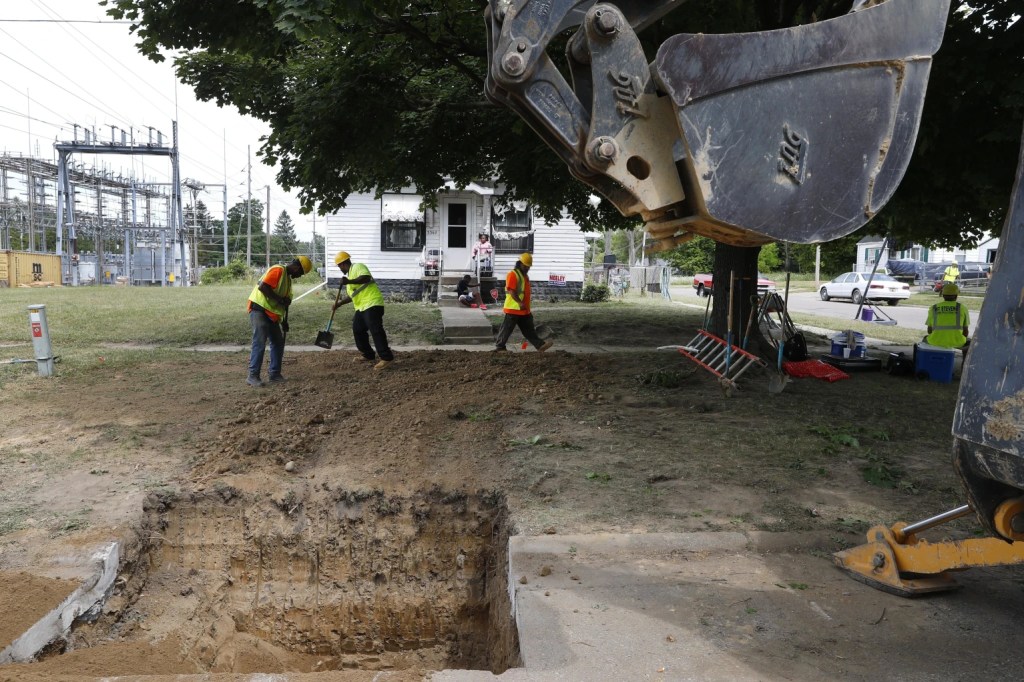
Photo credit: AP News
Jeffrey Bell told AP News that his mother, Betty Bell, regularly called the city for updates on her property in between buying bottled water. Eventually, someone called back to inform her that her water line was safe and checked in 2017, but that was never communicated to her.
Because of residents’ distrust, when letters came to their homes and contractors to their door offering line replacement, many homeowners opted out of the free pipe replacement. In 2024, an ordinance was passed that removed the option to refuse pipe replacement, a win for renters.
To this day, there are no records of homes that opted out or the status of vacant homes. These groups were not included in the original settlement, so thousands of homes are once again forgotten by the city that has failed them time and time again.
Why It Matters
Flint’s population has dropped 20% over 10 years to just over 81,000 residents in 2020, the lowest population the city has experienced since 1910. Since the status of water quality for vacent homes is unclear, the path for population and economical growth remains rocky for the city.
 KaseyDeschler.com