January 15, 2024
With the recent box office release of the book-to-musical Wicked, The Wizard of Oz resurgence ignited for the nth time in history. The Library of Congress named it the most-watched movie in history, and I predict its growth will soar again after its copyright expires in 2035. With so many eyes on the 85-year-old film, misinformation inevitably arose alongside many incredible yet true stories from its production.
Myth: A munchkin did not hang itself on set
Guys, there was not a covered-up suicide on the set of The Wizard of Oz. There are countless duplicates across the internet of an ominous, doctored swinging shadow in the background of the cast singing one of the most famous movie songs of all time, We’re Off to See the Wizard.
The entire movie was filmed on indoor sets, so the trees were either painted in post-production or were so fragile they couldn’t hold much weight. If you know where to look in the original film, a fluttering shadow can be seen in the woods. A crane was on set during the shooting of this scene, which is the widely accepted explanation for this mysterious shadow.

Director Victor Flemming with the crane.
Truth: All of the real incidents of harm on set
Early Hollywood didn’t have many safety protocols that protect today’s actors, so while many exaggerations exist about incidents on set, it’s true that this movie seemed cursed from the start. Buddy Ebsen began production as the Tin Man with over a month of rehearsal, recording music, and costuming. Nine days into filming, however, Ebsen was sent to the hospital for two weeks after experiencing extreme shortness of breath and cramping while on set. His lungs developed an infection or had an allergic reaction to the experimental makeup consisting of silver aluminum dust and white face paint. He was able to fully recover after being replaced by Jack Haley and lived another 64 years until his death in 2003.
Few in the main cast had comfortable costumes. Infamously, the Cowardly Lion’s costume weighed just under 100 pounds, forcing its wearer, Bert Lahr, to take frequent breaks between takes in front of a fan or lying on a board next to Haley in his own heavy Tin Man costume. The Wicked Witch’s heavily copper-concentrated makeup took two hours to apply on Margaret Hamilton and stained her skin for months after filming concluded. The Scarecrow’s mask was constructed with thin rubber meant to be pliable but skin-tight enough to curve around Ray Bolger’s features, which made it difficult to breathe. Multiple masks were made over production as they ripped easily if not removed carefully and usually lasted only a few days.
Early in Dorothy’s arrival to Oz, the Wicked Witch tells her that she’ll “get you, my pretty, and your little dog too” before she teleports away with a puff of smoke and a pop of fire.
This effect was achieved by lowering Hamilton on a platform before the pyrotechnics crew set off fire, but often the tip of her hat or broom would be visible sinking into the floor. After an unsuccessful morning of filming, a new round of takes began after lunch where it was a known phenomenon that the crew was less attentive after the break. The fire was released so early that the broom caught fire inches from Hamilton’s face and hands, resulting in second and third-degree burns. The crew feared infection if the copper makeup seeped into her open wound so rubbing alcohol was vigorously wiped on her face and body before she went to the hospital, an excruciatingly painful moment Hamilton would never forget. After 6 weeks of recovery, she continued filming with a new aversion to scenes involving fire.
Bertha “Betty” Danko was the Wicked Witch’s stunt double and performed all of the flying broom scenes. During the scene where SURRENDER DOROTHY was written in the sky, Danko sat on a pipe disguised as the broomstick with billowing black smoke exiting the back as ink. On one of the takes, the pipe exploded, and Danko spent 11 days in the hospital. She was left with lifelong scars on her legs from the costume lodging in her skin.
Toto didn’t even make it out of the production injury-free. While on set with the Wicked Witch’s guards, one stepped on the Cairn Terrier’s foot causing a fracture that kept him off set for a few days. Toto’s owners renamed him Toto after the success of the film, but before filming he was known as Terry.
Myth: Asbestos wan’t used as snow in poppy scene
One of the most inescapable myths about The Wizard of Oz is asbestos infected the cast in the poppy field scene.
Despite what top Google results and your conspiracy-obsessed friend will tell you, the snowy scene was achieved with a crushed plaster material called gypsum. This fact was distinctly remembered by MGM makeup artist Charles Schram, who recalled picking specks out of the character’s costumes in an interview for the book The Road to Oz. Asbestos was used on set in the lining of the Scarecrow’s costume to prevent flames during a scene where the Wicked Witch throws a fireball at him.
Truth: Judy Garland was given drugs that began a lifelong addiction
The most pervasive truth that came out about the production of this movie was the hardships endured by its 16-year-old star, Judy Garland. Besides executives at MGM governing Garland’s weight and appearance, she was pushed into a cycle countless stars over the ages have endured: taking stimulants to be overworked in the day and sleeping pills to crash before starting again in just a few hours. Judy Garland was an inch shy of 5 feet tall, so 6 months of this grind took a toll on her body and mind. While Garland’s mother first introduced her to “pep drugs,” her time on set affected her relationship with drugs for the rest of her life, leading to her death by unintentional overdose on barbiturates.
Myth: Many Mandela effects with misquoted lines
“Fly, my pretties, fly!” and “I don’t think we’re in Kansas anymore, Toto”.
What do both of these lines have in common? They are both not accurate to the script, but are commonly quoted as such. The actual lines are “Fly, fly, fly!” and “Toto, I’ve a feeling we’re not in Kansas anymore.” As with many widely seen films, The Wizard of Oz has a few prevalent misremembered quotes that have made their way into everyday references we use in our daily vernacular.
Truth: Frank Morgan portrayed 5 characters
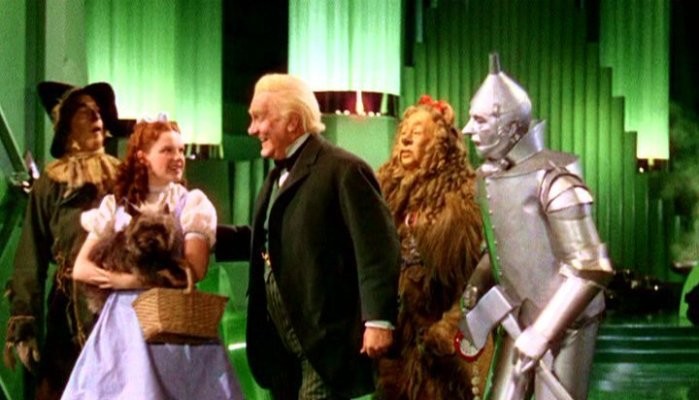
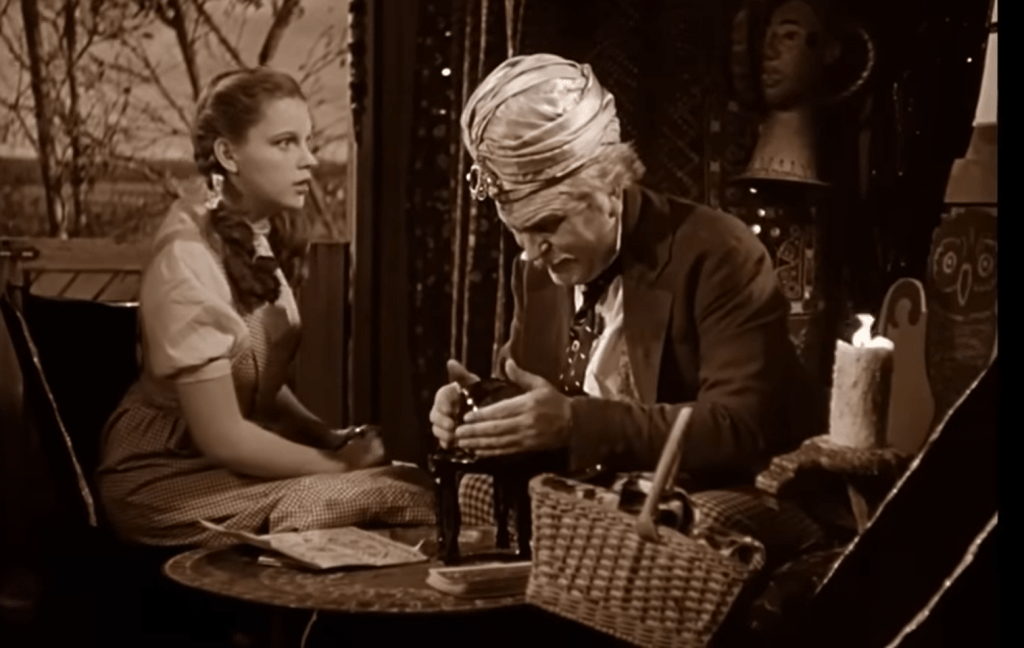
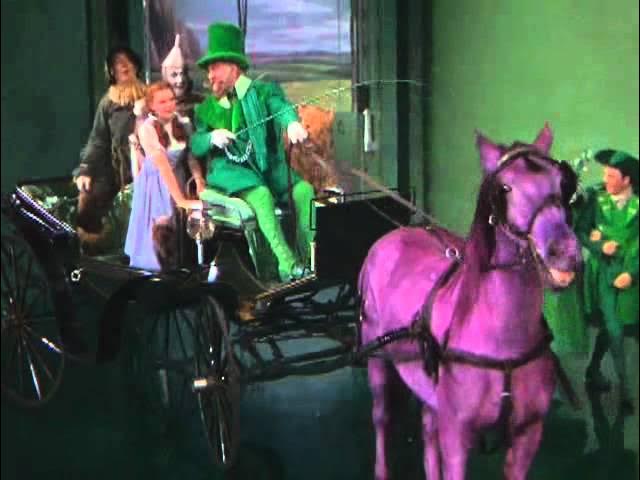
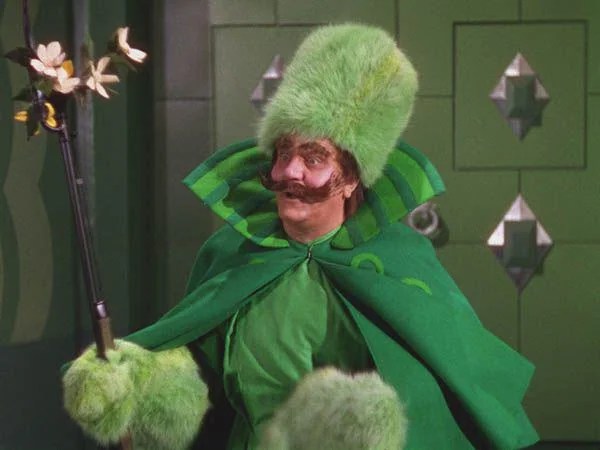
No, you’re not seeing double; Oz played 4 other roles in the film. At the start, Dorothy happens upon psychic Professor Marvel, who sends her home, fearing a tornado approaching after looking into his crystal ball. Later, he was the obstructive doorman who initially did not let the protagonists into the Emerald City. He completely flipped his tone as the carriage driver with the color-changing horse, a precursor of LED lights in modern cars. Finally, he thwarted the cast once again by denying their meeting with Oz as the Palace Guard.

 KaseyDeschler.com