May 19, 2023
The Riverside Arts Center is a cultural and arts hub of Ypsilanti.
The center works to promote awareness of the collective effort of local art and provide opportunities for career artist’s professional development. Community involvement in art has been the focus of the Riverside Art Center since its board opened its doors in downtown Ypsilanti in 1995. Many founding members remain on the center’s board today, and are now working towards its rebuild.
The center is a 3 person team, all of which have worked in their positions less than 2 years. Like other areas of life affected by COVID-19, many communities and businesses around the arts fell apart during the pandemic. Grey Grant, the center’s marketing and administrative assistant said they are trying to do foundational work from the ground up. The center hosted a series of community feedback conversations with Ypsilanti residents to get a sense of what the community needs so they don’t throw out programming that people aren’t interested in or are committed to going somewhere else.
“The consensus was that they wanted a place where they could just show up and be in community with folks, so we are trying to do that,” Grant said.
Grey said accessible art is good for establishing third spaces, which is a community away from home and work or school. Studies about third spaces from home and work or school have been limited since it was first noted in a 1989 book called “The Great Good Place” by Ray Oldenburg, but has been a popular concept in urban planning and self-help guides.
“A gathering place to engage, especially in a world where we have moved away from old models of community gathering as a majority, ie. religious spaces for those of us who do not go to church. There is a new, wild thing that is happening for millennials and Gen Z folk where we are extra lonely because we don’t have built in communities, like when we leave school,” said Grant.
Many cities and townships across Michigan host an arts and culture center, and the Michigan Arts and Culture Council is the bridge connecting them. The council works as a resource to offer art and cultural experiences across the state through grant opportunities and information sharing. The director, Alyson Watson, says funding for the arts is essential.
“It’s a price of who we are, how we connect and how we can understand ourselves, our families, our communities and the world around us is through arts and culture and creative expression,” Watson said.
Data from the U.S Bureau of Economic Analysis and National Assembly of State Art Agencies accounted for arts and cultural production as 2.7% of Michigan’s state GDP in 2020, representing 109,943 jobs. The economic development that happens around entertainment are art events is not a metric that is tracked, but is a recognised feature to communities. An entire trip to a play at the Jackson Theatre or visit the Van Gogh exhibit at the DIA could encompass staying overnight, taxi rides or parking pass, ordering out of local restaurants.
“It’s a relationship that communities understand that arts adds to a vibrant culture and economics of a community.” said Watson.
The Michigan Council for Arts and Cultural Affairs was created in September 1991. Every U.S state and territory has a state arts agency and all 56 agencies meet physically and virtually to share knowledge about best practices and updates in support networks. Being connected to federal agencies provides a bridge from community programs to organizations like the National Endowment of the Arts and the Institute for Museum and Library services. Most important is the ability to connect projects from across the country.
“As different as states are, there are similarities between projects that might be of value to us in Michigan,” said Watson.
To alleviate competition between grant applications, the council awards five grants a year from their office and divides up the rest between 14 regional authorities to award an additional four each. Creative Washtenaw in Ypsilanti’s regional regranting authority. A panel of 5 volunteers review and score 20 grant applications to give the council input for their funding formulas to divide their output. The scoring panel meeting is public so an applicant could listen to the strong and weak points of their application live.
Watson explained nobody on the council is involved with the decision making process as it would be too difficult to choose between art event needs for different communities.
“We get to know them so we can’t be the ones to say no,” said Watson.
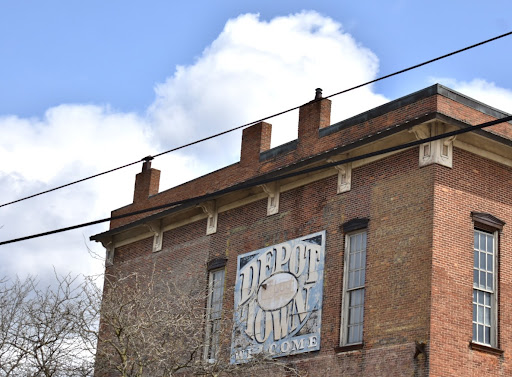
There are many avenues to participate in arts and cultural events, and many groups are trying to make it more accessible. Ann Blakeslee is the director of office of campus community writing and cofounder of Ypsiwrites, a community writing resource to support and amplify writer’s voices. In a partnership with U-of-M Museum of Art, a group of volunteers from YpsiWrites created three personal tour routes to see public art on Eastern Michigan’s campus and in Depot town and downtown Ypsilanti.
Each stop has a writing prompt or series of probing questions to respond to the art. Blakeslee said this project elevates art we see everyday and connects Ypsilantians to it in a more focused way.
“Public art is an expression of a community, who the community is and is a way of engaging people with community that reflect what community is” said Blakeslee.
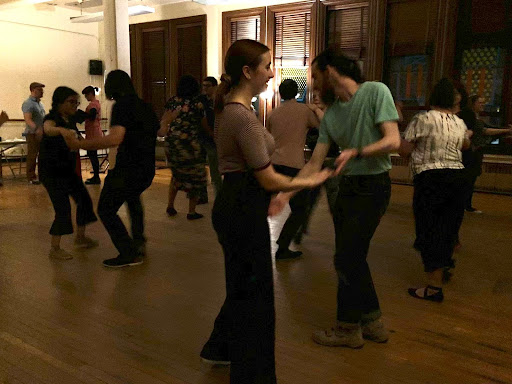
One of the center’s most successful events is Riverside Swings, a weekly swing night with free classes every Friday night from 8 – 9 p.m. followed by open swing until 11 p.m. for $5 for adults, $4 for students and every first Friday is free. Maggie Spencer, the Riverside Art Center’s manager of operations said this is one of the center’ longest running events.
“There is a very large swing dance community in Washtenaw county, it’s cool, it’s a lot of fun,” said Spencer.
Many dancer’s arrive early to the open swing and greet each other while they put on their flat tennis shoes or pumps and fill up bottles from the water fountain. A small group made their way to the exit after the free class but most stayed for the open swing. The attendees have varying levels of experience, some dancing for 15 years and others were introduced a few months or days ago.
After the beginner class wraps up at 9 p.m, a swing music playlist is set and attendees approach each other asking to dance. After each song, dancers break and switch off or chat with a new acquaintance for a few songs. One participant said that he often comes alone and meets new people every week.
 KaseyDeschler.com