October 13, 2022
Coming home from a day of classes, homework and work, students living on the 9th floor of Hoyt Hall at Eastern Michigan University can always anticipate a warm welcome from their residential advisor Ally Roberts who calls them out by name and asks about their day upon arrival inside.
Ally, a senior studying education, lounges in the front desk area of the building often, chatting with fellow residential advisors or desk assistants in her signature crocs and high fiving residents as she asks where they are coming in from. Little do her residents know the added struggles to her job that has been added to Ally’s plate this year.
Eastern Michigan University’s Board of Regents voted to approve a partnership with Gilbane Development Company on December 9th 2021 to lease the residence halls outside EMU. Gilbane now provides EMU’s residence halls with custodial and maintenance work, in exchange for retaining housing fees.
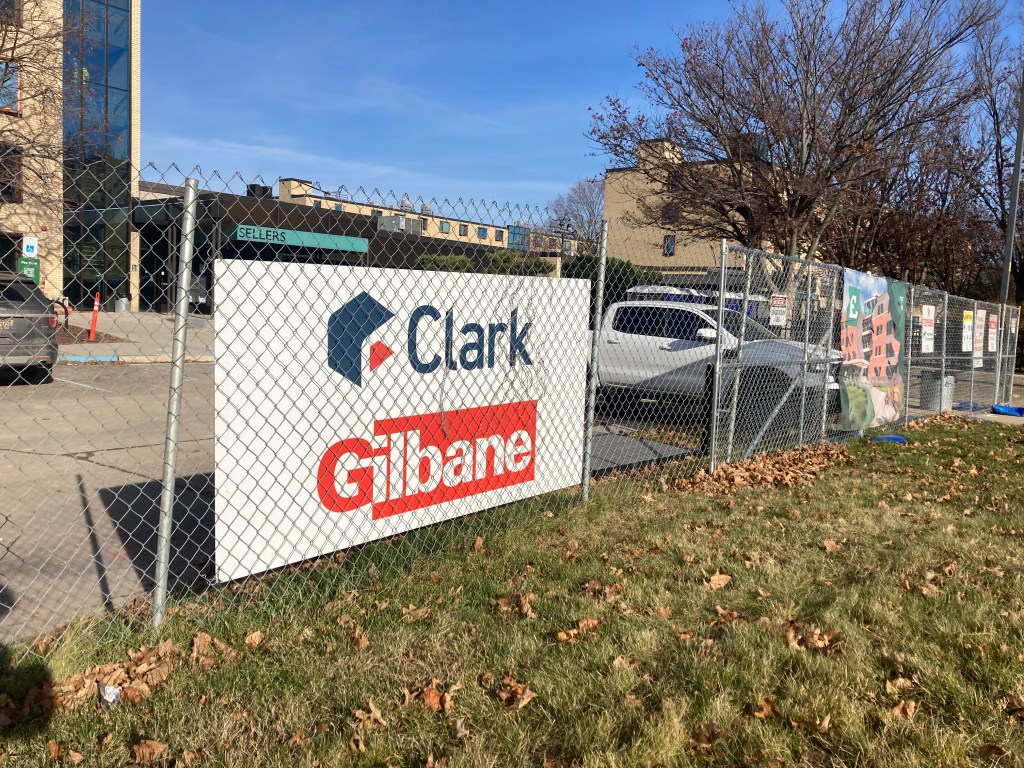
This deal will allow the University to finance a $200 million plan to renovate all resident halls on campus with one exception of a hall renovated in 2017. Long bands of black tarp, fenced off residence parking lots and clunky machinery plunked across campus showcases Gilbane’s work is already underway.
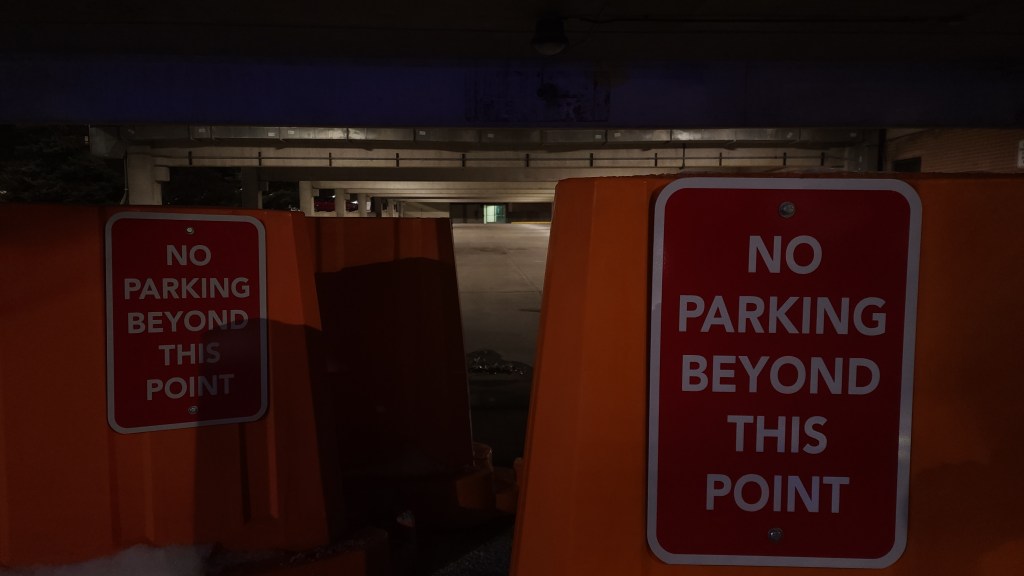
The primary parking lot for residents living in Hoyt and its sister building Pittman has been sliced in half by a long stretch of chain link fence containing fresh tree logs, heavy machinery and construction employee’s personal cars.
“We have 280ish people living here in Hoyt, even more people live in Pittman, and if we assume that even half of them have a car, how many parking passes is that? There’s like, maybe 50 spots in that parking lot.”
Gilbane’s presence can be felt inside the residence halls too, or rather lack thereof. Complaints of untimely cleaned glass shatters and trash left in resident’s hallways for hours are common in Hoyt Hall.
While smaller annoyances like emotional support dogs having to be hoisted above a maple syrup spill left in the elevator for a few days are inconvenient, when big annoyances occur, like power outages and blown AC units from ceiling water damage, response from maintenance must be swift. Ally says Gilbane is not acting fast enough to these emergencies.
The process of reporting emergency work orders, conditions that make a room unlivable to students, is one of the major changes this transition has brought to RA’s. Previously, it was done immediately by a physical plant or the Department of Public Safety if the condition was discovered after hours. Now, after contacting a complicated web of calling up the chain, Ally has no direct line to the person who is coming to perform maintenance, or even the number to someone who would.
“I had no way of telling them what was going to happen, the timeline of how this was going to get fixed, what they were going to do, who they were going to call, I had no idea.”
Ally only has praise for the new Gilbane custodial and maintenance staff. Many new hires work across campus despite none of EMU’s staff being let go, as they could stay with the university’s staff or take Gilbanes offer to all EMU custodial and maintenance staff to enter the company.
One of these new hires is Aqil Abernathy. After a string of leaving unfulfilling jobs, Aqil applied on Indeed and was hired in early september. His responsibilities include responding to work orders from the day and night before and maintaining the trash for Pittman, Hoyt, the Village Apartments and Cornell. The rest of the halls are divided up between his coworkers in equally large loads.
Despite working on Eastern’s campus for less than a semester, Aqil is all in for rooting his career here.
“It’s really tight-knit, very family oriented…With these new guys getting in, I definitely think we can start a clean slate and I am seeing that here. I am trying to start a new culture here”
Residence and Housing Life is trying to start a new culture for its RA’s and residents too, one with more intention. Starting fall 2022 semester, RHL trained RA’s to follow a curriculum outlining learning opportunities they feel students should receive while living on campus.
“The idea of a curriculum across the board is to create intentional opportunities to meet either educational priorities or learning outcomes. Living on campus can be fun, exciting, and opportunistic to connect with others, but we are trying to be really intentional in the activities that we are asking RA’s to do” said the Director of Residence and Housing life Jeanette Zalba.
Ally’s opportunity to connect to her residents has been handicapped by this curriculum. Another major responsibility of RA’s is to record resident connections which tracks how often RA’s have meaningful conversations with their residents, and that process has become much more tedious this year.
A specific set of questions about different topics like academic success and sense of belonging must be asked to complete a resident connection, which Ally says is quite limiting and can be awkward. Also, these connections must be made weekly so the same questions have to be asked over and over again if the RA doesn’t keep personal notes of answers, as receipts of this recurring documentation are not reported back to RAs.
“I feel like a therapist when I’m talking to my students and I’m like ‘oh wait I need to write this down to remember for later.’ They understand, I explained to them why I do it, but it can get sticky depending on the situation happening”
Ally’s open line of communication at any hours of the day or night has allowed her residents to trust her, even when she is left in the dark too.
 KaseyDeschler.com